Advanced Combat Tactics: Dominate Every Dungeon in Abyss Chronicle
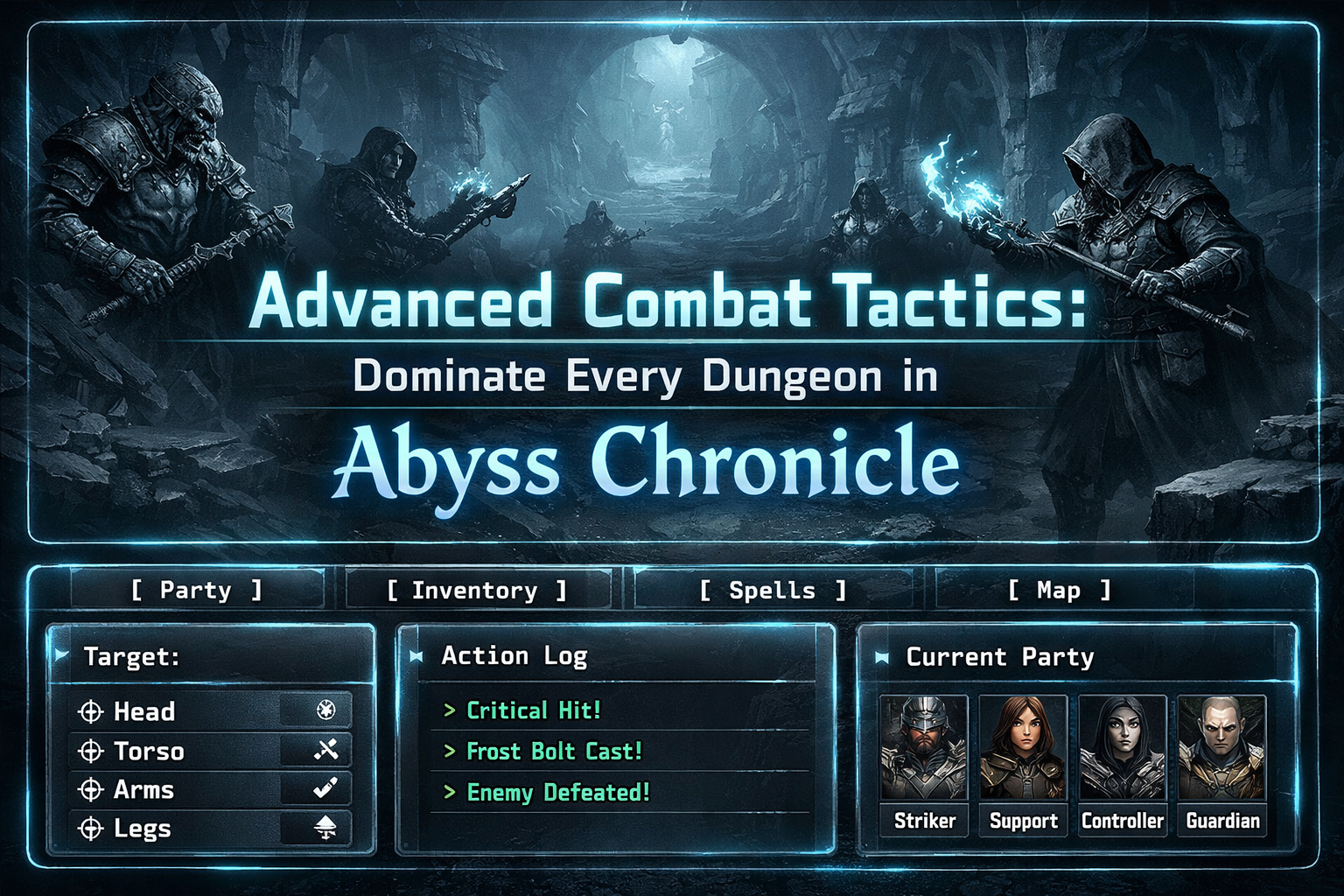
The shadowy depths of Abyss Chronicle beckon, promising untold riches and formidable challenges. While basic attacks and simple spellcasting might see you through the initial layers, true mastery of this dark fantasy text RPG lies in understanding its nuanced combat system. The core of Abyss Chronicle's strategic depth revolves around its innovative strategic body-part targeting combat. This isn't just about hitting harder; it's about hitting smarter, exploiting every vulnerability, and turning the tide of battle with calculated precision. If you find yourself consistently overwhelmed by the Abyss's denizens or struggling to push past certain difficulty thresholds, it's time to refine your approach.
This comprehensive guide is designed to transform your understanding of combat in Abyss Chronicle, taking you from a capable adventurer to a formidable dungeon dominator. We'll delve deep into the intricacies of body-part targeting, revealing how to identify and exploit enemy weaknesses. Furthermore, we'll dissect the powerful status effects – Drain, Rally, Taunt, and Blind – demonstrating how to weave them into devastating combos. Prepare to adapt your strategies to the ever-changing landscape of procedural dungeons, learning to leverage your companions and their unique roles, and even master the art of spell crafting to achieve unparalleled power. By the end of this article, you'll possess the tactical acumen needed to conquer every challenge the Abyss throws your way.
Unlocking Victory: Mastering Body-Part Targeting in Abyss Chronicle
At the heart of Abyss Chronicle's tactical combat lies the sophisticated body-part targeting system. This isn't a mere gimmick; it's a crucial layer of strategy that separates novice adventurers from seasoned veterans. Every enemy you encounter possesses multiple body parts, each with unique defensive properties, damage vulnerabilities, and potential for debilitating effects when successfully struck. Understanding these nuances is paramount to maximizing your damage output and controlling the flow of battle.
Consider a hulking Golem, its stone hide impervious to frontal assaults. Blindly striking its torso will yield minimal results. However, a precise blow to its exposed head might stun it, or targeting its legs could cripple its movement, giving your party valuable turns to reposition or unleash follow-up attacks. Similarly, a nimble Shadow Beast might evade headshots but be susceptible to attacks on its shadowy core, leading to critical damage. The key is to analyze your foe – sometimes the game provides subtle hints through descriptions, other times careful experimentation with different attacks and damage types reveals the optimal approach.
Understanding Anatomy and Critical Hits
Each enemy body part comes with an associated armor value, susceptibility to specific damage types (piercing, slashing, bludgeoning, elemental), and a critical hit chance modifier. A creature's head often presents a higher critical hit chance but might also be better armored or harder to hit. Legs, while potentially less armored, might offer fewer critical opportunities. Your goal is to identify the body part that offers the best balance of vulnerability and tactical advantage for your current attack. For example, if your Striker is wielding a heavy bludgeoning weapon, targeting a Golem's stony limbs might be more effective than aiming for its relatively smaller head, which might be better targeted by a spellcaster's precise elemental bolt. Successful critical hits not only deal amplified damage but can also trigger additional effects or increase the chance of applying status ailments.
Debuff Application Zones and Strategic Disruption
Beyond raw damage, body-part targeting is vital for applying debuffs strategically. Certain body parts might have a higher chance of suffering from specific status effects. Targeting an enemy's eyes with a "Blind" spell or attack, for instance, naturally has a higher success rate than hitting its foot. Striking an arm might reduce its attack power, while hitting legs can impair movement or dodge capabilities. This precise application of debuffs can completely neutralize a dangerous enemy. Imagine a powerful enemy Warrior whose primary threat is its sweeping cleave attack. Targeting its weapon arm can significantly reduce its damage potential, making it far less threatening. This advanced manipulation of the battlefield through focused debuffs is a cornerstone of effective strategic body-part targeting combat.
Weaponizing Status Effects: Drain, Rally, Taunt, and Blind in Tactical Play
Status effects are not just minor inconveniences for your enemies; they are powerful tactical tools that, when used intelligently, can turn unwinnable encounters into decisive victories. Abyss Chronicle features a robust system of status effects, and mastering their application and counter-play is crucial for advanced dungeon delving. Among the most impactful are Drain, Rally, Taunt, and Blind, each serving a distinct purpose in your strategic arsenal.
Drain is a potent debuff that saps an enemy's life force, often returning a portion to the caster or a targeted ally. It's excellent for sustained fights, allowing your party to mitigate incoming damage while still applying pressure. When an enemy possesses high health regeneration or is proving particularly resilient, consistent application of Drain can slowly but surely chip away at their endurance. It's particularly effective when paired with multi-hit abilities or area-of-effect spells to spread the effect across multiple targets.
Rally is primarily a buff, bolstering an ally's resolve and combat prowess. It often increases attack power, defense, or even grants temporary health or resistance to debuffs. Timing a Rally effect is critical – apply it just before your primary damage dealer unleashes a powerful ultimate ability, or use it on your Guardian to shore up their defenses against a devastating boss attack. Rally can also function as a form of "soft healing" by preventing damage or increasing an ally's ability to recover.
Taunt is the quintessential tanking ability. It forces enemies to focus their attacks on the Taunting character, drawing aggression away from squishier damage dealers or support characters. A well-placed Taunt on your Guardian companion can absorb critical damage, allowing your Strikers to freely unleash their full offensive potential. However, use Taunt judiciously; applying it to a low-health character or one ill-equipped to handle the incoming damage can spell disaster.
Blind is a direct combat disruptor, causing enemies to miss attacks or spells more frequently. Against high-damage, single-target enemies or dangerous spellcasters, Blind can drastically reduce their threat level. It buys your party valuable turns to heal, reposition, or set up devastating combos. Like Drain, Blind can be amplified by targeting specific body parts (e.g., eyes) for a higher chance of success.
Synergies Between Companions and Status Effects
The true power of these status effects emerges when combined with the right companion skills and roles. A Controller companion, for instance, might excel at applying Blind and Drain effects, while a Guardian will naturally be your primary source of Taunt. A Support character might have abilities to enhance Rally effects or cleanse negative statuses from your party, while a Striker could capitalize on an enemy debuffed by Blind with increased hit chances or critical damage. For example, a Controller might Blind a powerful enemy, followed by your Striker unleashing a high-damage attack that has a higher chance to hit due to the Blind, and then your Support uses Rally on the Striker to further boost their damage. This intricate dance of abilities is what makes Abyss Chronicle's combat so engaging. Many of these powerful skills and their interactions are further explored in the Abyss Chronicle Update 2026: New Companion Skills & Dungeon Events Unleashed! article, providing deeper insight into their updated functionalities.
Timing is Everything: Maximizing Impact
Applying status effects at the right moment can mean the difference between victory and defeat. Is the enemy about to unleash a powerful area-of-effect attack? Blind them to reduce its accuracy or Taunt them with your tank to soak the damage. Is your primary damage dealer low on health but poised to finish off a boss? Use Drain on the boss to both deal damage and restore health to a party member, or Rally your Striker to ensure they land the killing blow. Understanding enemy attack patterns and predicting their next move allows you to preemptively apply the most effective status effects, turning reactive defense into proactive dominance.
Navigating the Unknown: Adapting to Abyss Chronicle's Procedural Dungeons
Abyss Chronicle's world is one of relentless change. Each dungeon delve is a unique journey, thanks to its sophisticated procedural generation. This roguelike mechanic ensures that no two playthroughs are ever identical, constantly challenging your adaptability and strategic planning. While this adds immense replayability, it also demands a dynamic approach to combat. You can't rely on rote memorization of enemy placements or environmental hazards; instead, you must develop a flexible mindset that can assess and respond to ever-evolving threats and events. This dynamic environment is a core part of what makes Mastering the Abyss: Unraveling Abyss Chronicle's Roguelike Depths so captivating.
Upon entering a new section of a dungeon, your first priority should always be threat assessment. What types of enemies are present? Are there ranged attackers, melee brutes, or insidious spellcasters? Are they clustered together or spread out? Identifying the most dangerous threats – typically those with high damage output, debilitating status effects, or area-of-effect attacks – allows you to prioritize targets effectively. Often, eliminating healers or debuffers first can dramatically reduce the overall threat of an encounter, even if they aren't the largest or most imposing foes.
Dynamic Strategy Adjustments on the Fly
Unlike static RPGs, Abyss Chronicle demands constant strategic adjustments. A party composition that excelled against a group of melee-heavy goblins might flounder against a cluster of ranged archers and casters. You must be prepared to shift your tactics mid-combat. This might involve repositioning your Guardian to intercept ranged fire, having your Controller prioritize area-of-effect crowd control, or having your Support focus on buffs and heals to weather an initial burst of damage. Don't be afraid to change your target priorities if a new, more dangerous enemy enters the fray or if one of your companions becomes critically wounded. Flexibility is your greatest asset in the Abyss.
Leveraging Environmental Factors and Resource Management
Procedural dungeons aren't just about enemies; they also feature environmental factors and random events that can dramatically impact combat. Traps, hazardous terrain, or even beneficial shrines can appear unexpectedly. Learning to identify and utilize these elements to your advantage is a mark of advanced play. Can you lure an enemy onto a pressure plate that triggers a damaging trap? Can you use a choke point to funnel enemies into a narrow corridor, making them susceptible to area-of-effect spells? Conversely, avoiding environmental hazards that could harm your party is equally important.
Beyond immediate combat, effective resource management is crucial for long-term survival in procedural dungeons. Every spell, every ability, and every item used consumes a finite resource. Knowing when to conserve mana, when to use a powerful but limited skill, and when to retreat and heal are decisions that require foresight. A victorious battle that leaves your party depleted of resources might lead to a loss in the very next encounter. Consider how your spell crafting choices can impact this; carefully designed spells can be incredibly mana-efficient or offer unique utility in specific situations.
Forging Alliances: Companion Synergy and Advanced Spell Crafting
Your journey into the Abyss is rarely a solitary one. Abyss Chronicle offers 12 unique companions across four distinct roles: Striker, Support, Controller, and Guardian. Mastering the art of companion synergy and integrating advanced spell crafting into your strategy are pivotal for conquering the game's toughest challenges. A well-constructed party is far more than the sum of its parts, and custom-crafted spells can fill any tactical void.
The four companion roles are designed to complement each other. Strikers focus on dealing high damage, often specializing in single-target burst or area-of-effect clear. Support companions heal, buff allies, and remove debuffs. Controllers specialize in crowd control, applying debilitating status effects and manipulating enemy positioning. Guardians are your tanks, drawing enemy aggression and soaking damage to protect the rest of the party. The key to successful party building is creating a balanced team that can handle various threats while maximizing each companion's strengths. This intricate system is further broken down in Building Your Dream Team: Abyss Chronicle Companion Roles Explained (Striker, Support, Controller, Guardian), providing an essential foundation for team composition.
Role Optimization and Companion Combo Theory
Simply having one of each role isn't enough; you need to understand how their abilities interact. For example, a Guardian's Taunt ability becomes exponentially more effective when a Support companion can also shield them or heal incoming damage. A Controller's area-of-effect stun sets up a Striker's powerful cleave attack perfectly. Consider combining a Controller's 'Blind' with a Striker who has a bonus to hit chance against blinded enemies, or a Support's 'Rally' with a Guardian's 'Drain' ability to ensure the tank stays alive while contributing to damage. Experiment with different companion pairings and ability sequences to discover potent combinations that devastate your foes. The "best" companions aren't always the ones with the highest raw stats; rather, they are the ones who create the most effective synergies within your chosen party composition.
Spell Crafting: Filling Gaps and Enhancing Strengths
Beyond your companions' innate abilities, the spell crafting system provides an unparalleled opportunity for customization and strategic depth. This allows you to design spells that precisely address your party's weaknesses or amplify its strengths. Do you find your party lacking in reliable single-target burst damage? Craft a potent direct damage spell. Are you struggling with enemies that apply nasty debuffs? Create a spell that cleanses multiple allies simultaneously. Is your Guardian taking too much sustained damage? Design a powerful shield or self-heal spell.
Advanced spell crafting involves understanding the various runic components and their effects, experimenting with combinations to achieve desired outcomes, and carefully managing your available resources. It’s not just about creating the biggest explosion; it's about creating the right tool for the right job. Perhaps you craft a 'piercing' elemental spell specifically to exploit a boss's weakness, or a unique 'drain-on-hit' enchantment for your Striker's weapon to provide passive healing. The spell crafting system truly allows you to tailor your tactical approach to the challenges of the Abyss.
FAQ Section
Q: How do I identify an enemy's body-part weaknesses?
A: While direct indicators are sometimes present in enemy descriptions, often you'll need to experiment. Observe which body parts take more damage from different attack types (slashing, bludgeoning, piercing, elemental) or which attacks trigger status effects more reliably. Early experimentation is key.
Q: What is the most important status effect for survival?
A: It depends on the encounter. 'Taunt' is critical for protecting squishier allies from high-damage enemies, making it vital for tanking. 'Blind' is excellent for mitigating incoming damage from accuracy-reliant foes. A balanced application of all effects, tailored to the situation, is always best.
Q: Can I respec my companions' skills or crafted spells?
A: Abyss Chronicle typically allows for some flexibility, often through in-game mechanics or specific vendors. This usually involves a cost, so plan your builds carefully, but don't be afraid to experiment with new strategies as you progress.
Q: How does permadeath interact with advanced combat strategies?
A: Permadeath (with resurrection options) significantly raises the stakes, making every combat decision critical. This reinforces the need for advanced tactics, careful resource management, and risk assessment. Knowing when to retreat or when to push your luck becomes a core strategic element.
Conclusion
Mastering Abyss Chronicle's advanced combat tactics is not merely about surviving the dungeons; it's about dominating them. By meticulously understanding and exploiting strategic body-part targeting combat, you gain an unparalleled advantage, turning enemy vulnerabilities into your greatest weapons. Integrating powerful status effects like Drain, Rally, Taunt, and Blind into your battle plans allows for intricate crowd control and damage mitigation, transforming chaotic skirmishes into controlled tactical engagements.
Furthermore, the unpredictable nature of Abyss Chronicle's roguelike mechanics demands constant adaptation. Your ability to assess threats, adjust strategies on the fly, and skillfully manage resources will determine your ultimate success in the ever-shifting depths. Finally, optimizing companion synergy and leveraging the robust spell crafting system allows you to build a truly formidable force, capable of overcoming any challenge.
Now that you're equipped with these advanced insights, the Abyss awaits your command. Put these strategies to the test, refine your approach, and etch your legend into the chronicles. Dive into the dark fantasy world, create your character, and start your journey to become a true master of combat. Play Abyss Chronicle Now! and experience the depth of this browser RPG for yourself. The Abyss calls; will you answer?